Current projects
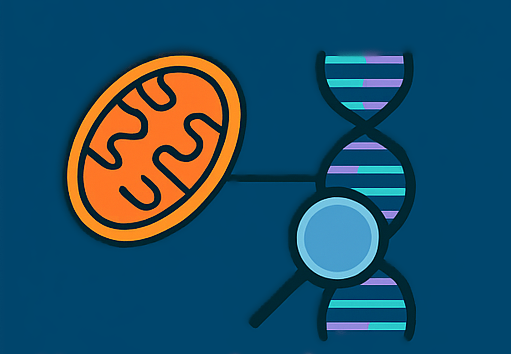
Unconventional Genome architecture, Gene Structure and Gene Expression in Mitochondria of Micro-eukaryotes
We are studying the extraordinary biological diversity outside the 'main-stream' eukaryotic phyla.
The focus of our current work is on a eukaryotic group displaying most unusual gene expression: the diplonemids.
In Diplonema papillatum, we discovered that its mitochondrial genome consists of ~80 different
circular chromosomes, each of which carries a small piece of a gene (for a review see e.g., Valach M et al 2016, RNA Biol).
Gene modules are transcribed separately and the resulting transcripts are then joined together to contiguous mRNAs and rRNAs by a process we refer to as trans-splicing.
Further, we detected several two types of RNA editing, affecting about 2/3 of genes. One proceeds by insertion of multiple Us at a given site, the other by nucleotide substitutions (C to U and A to I). Other diplonemid species (e.g. D. ambulator, D. sp. 2, Rhynchopus euleides) have also a multipartite mitochondrial genome, gene fragmentation und RNA editing - though with resourceful variations on the theme.
Our working hypothesis is that trans-splicing and RNA editing in diplonemids
is directed by trans-factors, probably proteins. To test this hypothesis, we are employing genomics, transcriptomics, proteomics and
bioinformatics approaches. Experimental data help to formulate specific search strategies
and vice versa, bioinformatics hypotheses are being tested experimentally.
In addition, we have started exploring mtDNAs of other members of Euglenozoa, notably
yet undescribed diplonemids and euglenids, in order to
trace back the evolution of multipartite mitochondrial genomes, gene fragmentation, and RNA editing in this lineage (Kaur B et al 2020, Nucleic Acids Res). (NSERC RGPIN-2019-04024)
Unraveling Novel Molecular Functions
To get insight into the machineries that catalyze the unique trans-splicing and RNA editing in diplonemid mitochondria, and also to infer the metabolic capacity of these protists, we have sequenced the nuclear genome and transcriptome of Diplonema papillatum. Collaborators in this project are Julius Lukes (University of South Bohemia, CZ), and since recently, Tom Williams (University of Bristol, UK), with genome sequencing, assembly and automated function-annotation spearheaded by the Burger laboratory (Valach M et al 2023, BMC Biol) (NSERC RGPIN-2010-04024; GBMF MMI GBMF4983.01). Currently, we are investigating the machinery performing substitution RNA editing, by analysing the composition of a mitochondrial protein complex comprising an RNA deaminase postulated to transform C to U and A to I (FRQNT 2023-PR-326068).
New Genetic Tools for Marine Micro-eukaryotes
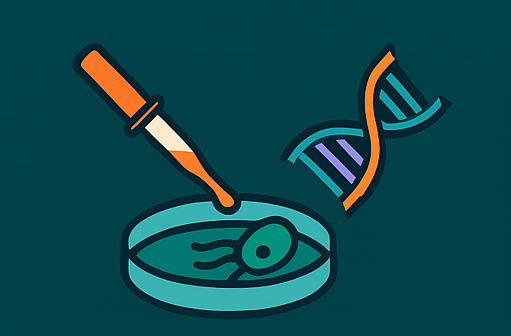
Unlike baker's yeast and other model organisms, there are no genetics or reverse-genetics tools available for diplonemids. In collaboration with J. Lukes (University of South Bohemia, CZ) and P. Keeling (University of British Columbia, CA), we are about to overcome this limitation. Methods are being developped for replacing, knocking-out, and tagging Diplonema genes, with the first hurdle successfully taken: the stable introduction and integration of foreign DNA in Diplonema's nuclear genome. Once in place, these new methods will substantially facilitate and accelerate the study of the unique molecular-mechanistic abilities of this organismal group (Faktorova D et al 2020, Environ Microbiol). (Gordon and Betty Moore Foundation, GBMF MMI GBMF4983.01)
Reconstruction of the Ancestral Nuclear Genome
The protist group called jakobids is considered to include the most primitive (least derived or most ancestral) eukaryotes known. To understand the basic gene make-up of primitive eukaryotes, Our consortium is analysing nuclear genomes from this group. These data will also help to resolve with confidence which group the earliest offshoot of eukaryotes may be. This question has not been resolved with confidence, due to the extremely deep divergences in the eukaryotic phylogenetic tree.
We have published a draft assembly from Andalucia godoyi together with an in-depth analysis of proteins predicted to be imported into mitochondria (Gray MW et al 2020, BMC Biol). The 'Jakobids Genome Consortium' includes, in addition to Burger's group (with support from NSERC-2014-05286), BF. Lang (UdeM), M. Elias (Ostrava University, CZ), MW. Gray, and A. Roger (both Dalhousie University, Halifax, CA). Genome sequencing and annotation is ongoing in BF. Lang's lab.
Information Processing in Primitive Eukaryotes
In the initial transition phase from a symbiotic bacterium to an organelle, the proto-mitochondrial genome must have encoded more than a thousand genes specifying mitochondrial proteins, and must have adhered to bacterial conventions with respect to genome organization, RNA transcription and protein translation. However, in present-day mitochondria from animals, fungi and plants, gene organization and gene expression bear little traces of their bacterial past.
This project aimed at elucidating the steps that had been involved in the 'domestication' of the endosymbiotic bacterial ancestor, and at tracing the processes by which the predecessor of mitochondria was transformed into a eukaryotic organelle. These questions can now be tackled effectively through our discovery of mitochondrial DNAs resembling bacterial genomes in miniature: in unicellular, flagellated protozoans called jakobids.
We investigated Andalucia godoyi to find out the degree to which mitochondrial information processing --from gene via RNA to protein-- resembles that of bacteria or rather 'modern' mitochondria as we known them from animals, fungi, and plants. Our approach combines classical biochemistry, new generation genomics methodologies and bioinformatics. For example, we examined by proteomics the structure of the Andalucia mitoribosome, revealing an unexpected complex machinery in this protist with the most bacteria-like mito-ribosomal RNAs (Valach M et al 2021, Molec Biol Evol) (NSERC RGPIN-2014-05286)

Ongoing Bioinformatic Tool Development
I am participating in the development of automated genome annotation tools such as MFannot, an organelle genome annotator (Lang BF et al 2023, Prot Plant Sci), and Eukan, a nuclear genome annotator that will soon be released. These projects are spearheaded by BF. Lang. My contribution consists in testing the tools for robustness (particularly when using unusual genome architectures and gene structures), performance, ease of usage and informative output (NSERC, FRQNT 2018-PR-206806).
Past projects
Interactions Between Plants and Endosymbiotic Microbes
MycAtok was a collaboration between academics, agronomists and farmers, and which involved metabolomics and microbiology approaches, as well as greenhouse and field trials.
The goal of this project was to isolate endosymbiotic microbes from the Ericacean plant Vaccinium macrocarpon, the North American cranberry, and screen the former for biocontrol and plant growth stimulation, with a particular emphasis on complementarity and synergy between fungal and bacterial endosymbionts. We sequenced and annotated the microbes' genomes to identify genes with the potential of anti-microbial action and mediating interspecfic molecular crosstalk. Transcriptomics unraveled the molecular basis of microbe-microbe and microbe-plant interactions (Thimmappa BC et al 2023, J Fungi; 2024; Front Microbiol; 2025, Microbiol Resour Announc).
Genomics of Bacterial Endosymbionts in Eukaryotes
CINAR Pathobacter was a European Union Research Project. In collaboration with four other universities in Europe and one in the USA, we are investigating ciliate-bacteria relationships at an ecological, functional and evolutionary-genomics level. The Montreal group (BF Lang & G Burger) was focussing on genome sequencing and annotation of Holospora bacteria (Castelli M et al 2016, (Congresso Nationale Protistologia; Zoologica).
Omics for Phytoremediation
The GenoRem project aimed at studing the inter-relationships between plants, fungi, and bacteria in the detoxification of soils that are contaminated with organic or inorganic compounds. The experimental approaches include genomics, transcriptomics, proteomics, and metabolomics. Bioinformatics methodologies assure thorough data management and analysis. This project was conducted by ~30 collaborating researchers of the Universite de Montreal and McGill University, and was financed by Genome Canada and Genome Quebec (Bell TH et al 2014, Trends Biotechnol).
Nuclear Genome Exploration
The genome project Unicorn was a collaboration of seven research groups from Canada, UK, and USA, and endorsed by the National Human Genome Research Institute (NHGRI). This project aimed at understanding how multicellularity first evolved. Genomic data were generated from unicellular relatives of animals and fungi, i.e., choanflagellates, Ichthyosporea, Nuclearidae, chytrids, zygomycetes and apusozoa (outgroup) (Ruiz-Trillo I et al 2007, Trends Genet).
Organelle Genome Database
GOBASE was a comparative database that tied together and unified the various data on mitochondrial and chloroplast genomes and the organism which contain them, by making the information network-accessible to the scientific community. Data validation and addition of missing information is at the center of this project (O'Brien E et al 2007, Nucleic Acids Res).
EST Surveys
The Protist EST Program (PEP), a collaboration involving eight Canadian research groups, aimed to determine the expressed portions of genomes from a taxonomically broad collection of mostly unicellular eukaryotes. The organismal group studied by us were jakobid flagellates, which are believed to be amongst the most primitive extant eukaryotes. The goal of this project was to better understand early eukaryotic cell evolution (Keeling PJ et al 2005, Trends Ecol Evol). See also TBestDB below.
Organelle Genomics
The Organelle Genome Megasequencing Program (OGMP) is a collaborative project aiming at complete sequencing of mitochondrial and chloroplast genomes of a phylogenetically broad collection of mostly unicellular eukaryotes (Protista) (see Gray MW et al 2004, Annu Rev Genet).
Previous Bioinformatics Development
TBestDB
was a database to organize c-DNA and EST data from poorly-investigated protistan eukaryotes,
generated by the pan-Canadian Protist EST program. Cross-referencing was
possible between the various PEP projects and with data from model
organisms, including yeast, flatworm, but also cyanobacteria and
alpha-proteobacteria, the ancestors of eukaryotic organelles. The
gene ontology framework (developped by the GO consortium) allowed interoperability with single-organism databases.
New data, as soon as released, were incorporated into TBestDB for network access and download by
the scientific community (O'Brien E et al 2007, Nucl Acids Res).
AutoFACT was
an automated pipeline to annotate EST sequences in a comprehensive and
informative way. It has been used to annotate PEP data, and was made
available as open source (Koski LB et al 2005, BMC Bioinformatics).
AnaBench,
a web-based, integrated analysis environment, provides biologists access
to diverse bioinformatics tools. The current prototype, which is accessible to
the public, includes translation, Blast searches, multiple alignment,
tRNA search, and more (Badidi E et al 2003, BMC Bioinformatics).
Prediction of protein function and cellular localization. In typical
genome projects, only ~50% of the protein-coding genes can be assigned to a function,
and even less to a particular cellular location. This highlights the need of
sensitive and efficient prediction methods.
The main objective of this project was to apply machine learning methods
(predictive data mining), to detect hidden signatures and patterns in integrated
biological data, and to employ this new knowledge for deciphering genomic data at
a large scale (Shen YQ & Burger G 2007, BMC Bioinformatics; Kannan S & Burger G 2008, BMC Genomics; ProteinPep Lett).